

Gods on Your Screen: The Myths Behind 11 Mythology Cursors
The Greek mythology cursor collection holds eleven gods and monsters, and each one carries a story. Walk with me through the gallery: we will stop at every design, name who it shows, and point out what to look for.
Welcome to the gallery
Each design below has two images: a face for the normal cursor and an object for the pointer that shows over links and buttons. Everything I describe is what appears in the pictures. The stories come from the sources listed at the end.
To try any of them, open its page, press Preview and move the mouse inside the HOVER ME box. The whole set lives in the Greek mythology collection.
Room one: the Greek gods
Zeus, king of the gods
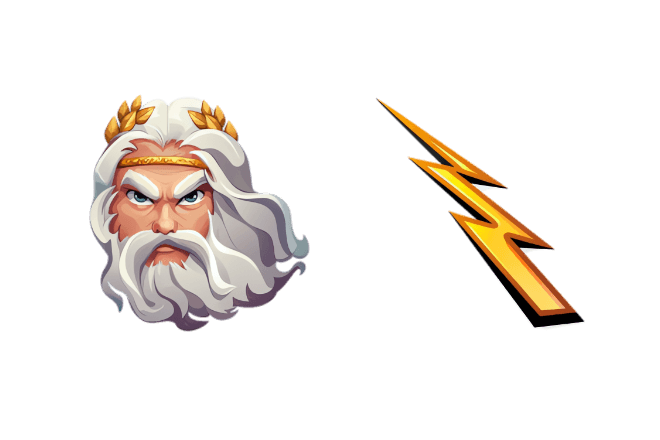
Zeus rules the sky, the weather, law and order. He is the son of Kronos and Rhea, and he lives on Mount Olympus. His best-known tool is the lightning bolt, and an eagle is one of his sacred animals. The Romans knew him as Jupiter.
Look closely at the design. The face has a white beard and swept-back hair, with small golden laurel leaves above the ears and a gold band across the forehead. The brows are lowered into a stern frown. The pointer is a glossy golden lightning bolt, which is exactly his emblem.
Poseidon, lord of the sea
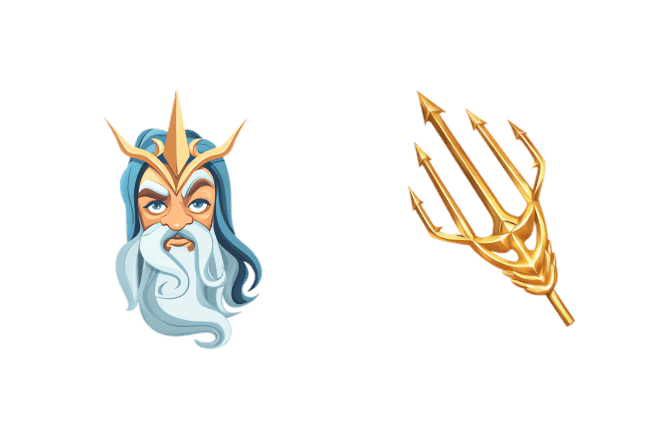
Poseidon is Zeus's brother. He is the god of the sea, earthquakes and horses, and he is often shown with a trident, a three-pronged fishing spear.
On the design, the hair and beard are blue, which is a neat link to the sea. A tall golden crown rises to a point at the center. The pointer is a golden trident with barbed tips.
Hades, ruler of the underworld
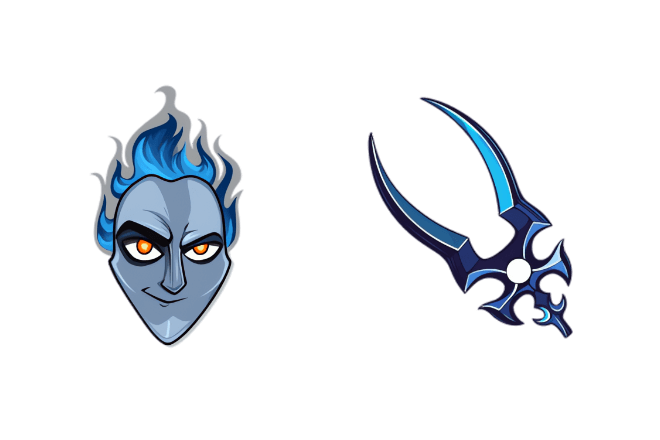
On the site this design carries the title "God Aid", but its page describes Hades, so that is the name I use here. Hades is the third brother. After the gods defeated the Titans, Hades, Zeus and Poseidon drew lots: Zeus won the sky, Poseidon the sea and Hades the underworld.
He is the husband of Persephone, whom he carried off with the approval of Zeus. He was also called Pluto, meaning "the rich one", because wealth comes out of the earth.
What stands out here is the fire. The hair is a crown of blue flames edged in gray, the skin is blue-gray, and the eyes are bright orange under heavy lids. A sly half-smile completes the look. The pointer is a pair of curved dark-blue blades on a decorated hilt. The blue flames are the artist's own twist.
Ares, the god of war
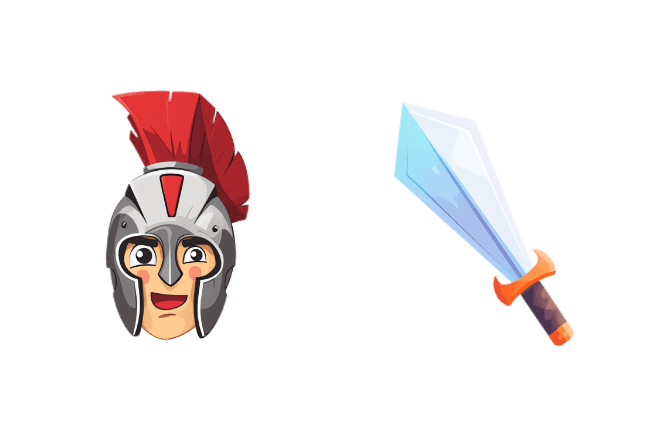
Ares is the son of Zeus and Hera. He stands for the noise and chaos of battle more than for clever strategy. The other gods did not much like him. The Romans identified their god Mars with him.
His usual attributes are a peaked helmet, a shield and a spear. The cursor shows the helmet, with a big red crest that sweeps backwards. Under it is a cheerful, rosy-cheeked face, which is a surprise for a war god. The pointer is a sword with a pale icy-blue blade and an orange guard, so this version looks more friendly than fearsome.
Hermes, the messenger
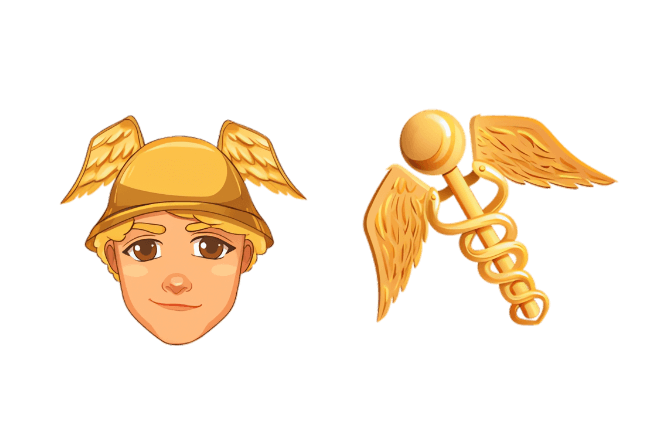
Hermes is the son of Zeus and Maia, and he serves as the herald of the gods. He is the god of roads and travellers, and he is linked to cunning. He leads the dead down to the underworld, which makes him a guide of souls as well.
Wings are his trademark. Notice the golden helmet with a small wing on each side, and the calm, gentle face under it. The pointer is a golden caduceus, the herald's staff, with two wings at the top and coils twisting around the shaft.
Athena, wisdom and strategy
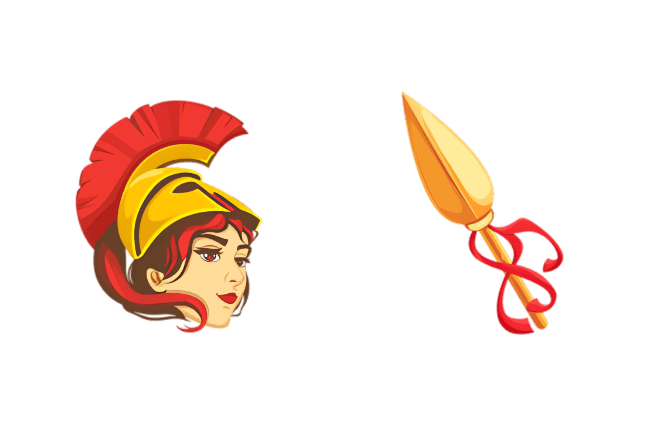
The most widespread tale says Athena was born from the head of Zeus, fully grown and armed. She is the goddess of wisdom, good counsel, defence of cities and crafts such as weaving. The owl and the olive tree are her symbols.
Her helmet is the star of this design: gold, with a tall red crest. Dark hair with red streaks falls from under it, and the lips are painted red. The pointer is a golden spear with a red ribbon tied below the head.
Medusa, the Gorgon
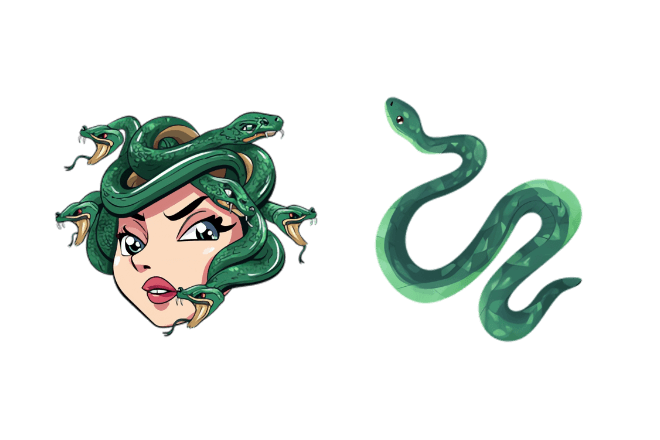
Medusa was one of three Gorgon sisters, and the only mortal one. Snakes grew from her head, and her gaze turned people to stone. The hero Perseus was sent to fetch her head, and he used gifts from the gods, including a reflective shield and winged sandals. Athena later set the head on her aegis.
The cursor shows a face wrapped in green snakes, some with open mouths and visible fangs. Her eyes are turned sharply to the side and her brows are drawn in. The pointer is a single green snake in a long S-curve, a gentler piece than the face.
Room two: Rome
Ceres, goddess of grain
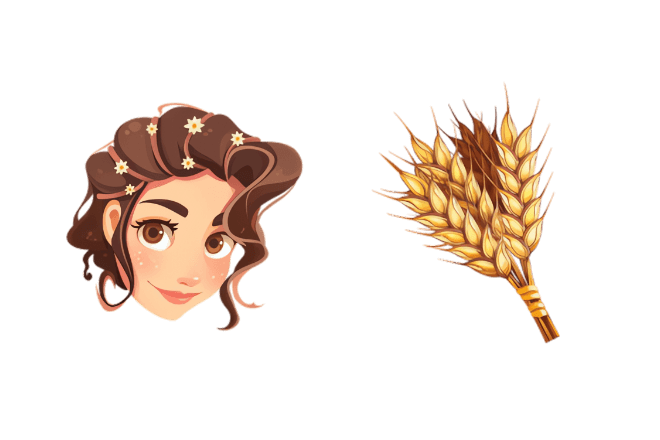
Ceres was the Roman goddess of farming, grain and motherhood. Her temple on the Aventine Hill in Rome was vowed in 496 BC and finished around 493 BC. The Romans identified her with the Greek Demeter, and her myth of searching for her daughter Proserpina follows Demeter's story.
The English word "cereal" comes from Ceres. The design fits: the face has curly brown hair decorated with tiny white flowers, and the pointer is a golden sheaf of wheat tied with a band.
Room three: Egypt
Anubis, guide of the dead
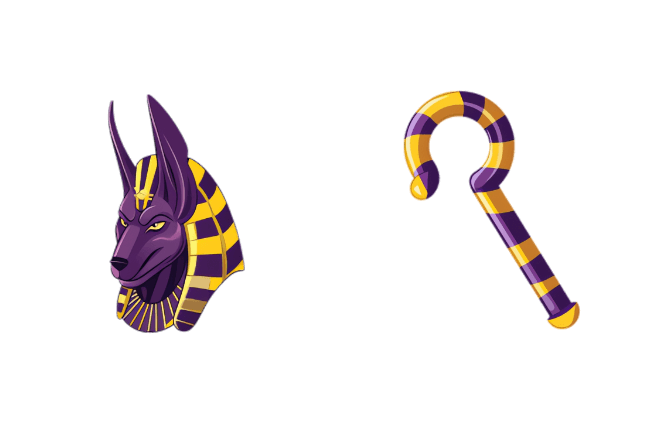
Anubis is the Egyptian god of funeral rites and the protector of graves. He appears as a jackal or as a man with a jackal's head, because jackals were seen around cemeteries. He was linked to embalming and he oversees the scale on which a heart is weighed against the feather of Ma'at.
The cursor is a dark purple jackal head with tall pointed ears, narrow golden eyes and a striped gold-and-purple headdress. The pointer is a curved staff wrapped in the same gold and purple stripes.
Horus, the falcon god
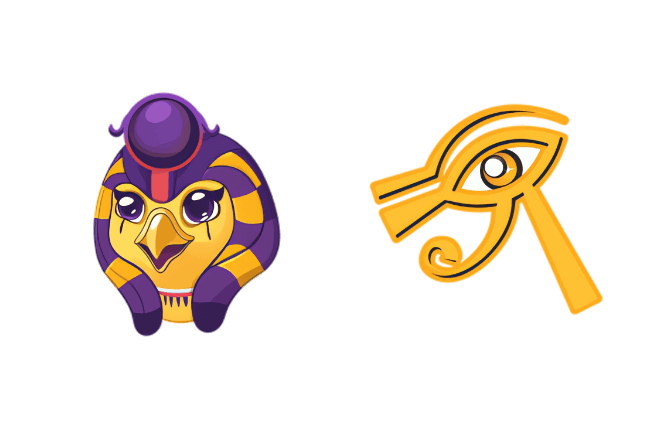
Horus is a sky and kingship god, shown as a falcon or as a man with a falcon's head. He is most often described as the son of Osiris and Isis. After his father was killed by Set, he fought Set to avenge him and to claim the throne. The pharaoh was seen as the living Horus.
The Eye of Horus, called the wedjat, stood for protection and royal power. Here the cursor is a round, cartoon-style falcon face with big purple eyes, a golden beak and a large purple orb on its head. The pointer is a golden eye with a curling line below it, drawn in the style of the wedjat.
Bastet, the cat goddess
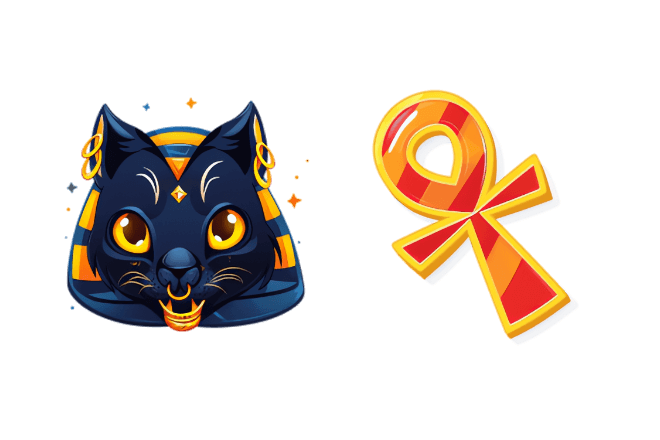
Bastet began as a fierce lioness goddess and over time became a gentler cat deity. Her main cult center was Bubastis in the Nile Delta, whose name means "House of Bastet". She guarded the king, protected people from disease and evil spirits, and was linked to pregnancy and childbirth.
The cursor is a black cat in a gold-trimmed blue headdress, with golden hoop earrings, a ring on the nose and tiny sparkles around the face. The pointer is an ankh, the Egyptian sign for life, striped in red and orange. The ankh is among her symbols.
Before you leave
That is the whole set. If you want to know how pointer shapes work in general, see cursor types explained. If you are curious about how the arrow itself came about, the history of the mouse pointer tells that story.
Pick any design you liked, press ADD, then choose it in the iLove Cursor extension popup. Tabs that were open before need a reload (F5).
Sources
Related posts
A Short History of the Mouse Pointer: From 1968 to Today
The history of the mouse pointer starts in a California research lab in the 1960s, with a wooden box and a question: how should a person point at things on a sc
Cursor Types Explained: What Every Pointer Shape Means
Cursor types are the different pointer shapes your computer shows as you move across a screen: arrow, hand, text bar, busy wheel and more. This guide lists each
 English
 Русский
 Українська
 Español
 Français
 Tiếng Việt
 Deutsch
 日本語
 中文
 Indonesia
 اردو